

 English


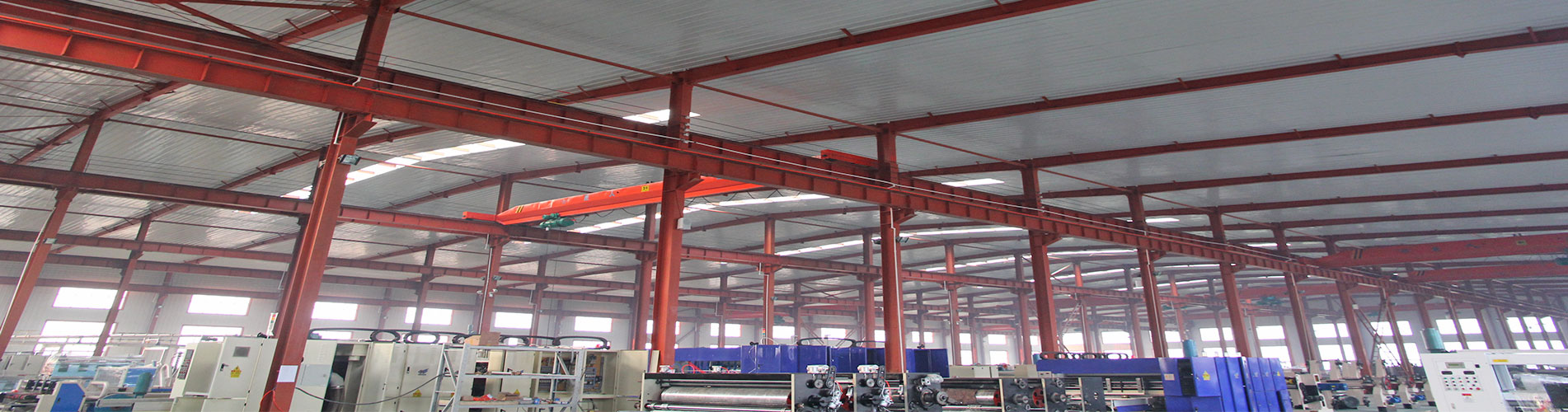

Why are steel structure buildings the preferred choice for earthquake resistance?
Steel structure buildings are often the preferred choice in earthquake‑prone areas because steel combines high strength with high ductility, allowing the building to survive large ground motions without collapsing. The key reasons are:
1. Excellent ductility and energy dissipation
Ductility means the material can undergo large plastic deformations before fracture.
In an earthquake, steel members can yield and bend in a controlled way, absorbing and dissipating seismic energy like a fuse.
This prevents brittle failure (sudden cracking/shattering) that is more likely in masonry or unreinforced concrete.
2. High strength‑to‑weight ratio
Steel is strong but light compared with concrete.
A lighter building exerts smaller inertial forces on itself during shaking (seismic force ≈ mass × acceleration).
Smaller forces mean less demand on columns, foundations, and lateral‑resisting systems.
3. Good toughness and redundancy
Steel structures are typically bolted or welded into continuous frames.
This creates multiple load paths: if one member is stressed beyond its capacity, others can share the load.
Combined with ductility, this redundancy greatly reduces the risk of progressive or total collapse.
4. Predictable, stable behavior
Steel has a well‑defined stress–strain relationship, so engineers can accurately model:
Yield strength
Ultimate strength
Hysteretic (energy‑dissipating) behavior under cyclic loading
This makes it easier to design reliable seismic systems (moment frames, braced frames, shear walls with steel plates, etc.).
5. Compatibility with modern seismic systems
Steel works very well with specialized earthquake‑resistant technologies, such as:
Base isolators (rubber‑lead bearings, friction pendulums)
Energy dissipation devices (viscous dampers, metallic yield dampers, buckling‑restrained braces)
These are easier to integrate into steel frames and more predictable in performance.
6. Faster, higher‑quality construction
Steel members are factory‑made to precise tolerances, then bolted/welded on site.
This leads to:
Fewer construction defects
More consistent quality control
Faster erection, which can reduce exposure to risk during construction
7. Post‑earthquake inspectability and repair
Damage in steel members (local buckling, flange yielding, connection distress) is often visible and localized.
Inspectors can more easily identify and quantify damage.
Repairs usually involve replacing or strengthening specific members or connections, rather than demolishing an entire reinforced concrete core.
In short:
Steel structures are preferred for earthquake resistance because they are light, strong, ductile, and predictable, and they can be combined with advanced energy‑dissipating systems to absorb and dissipate seismic energy, greatly reducing the risk of collapse and improving life safety.
Categories
latest blog
Tags


For inquiries about our products or pricelist, please leave to us and we will be in touch within 24 hours.
© Copyright: 2026 Hebei Baofeng Steel Structure CO.,LTD All Rights Reserved.

IPv6 network supported


 +8615720226351
