

 English


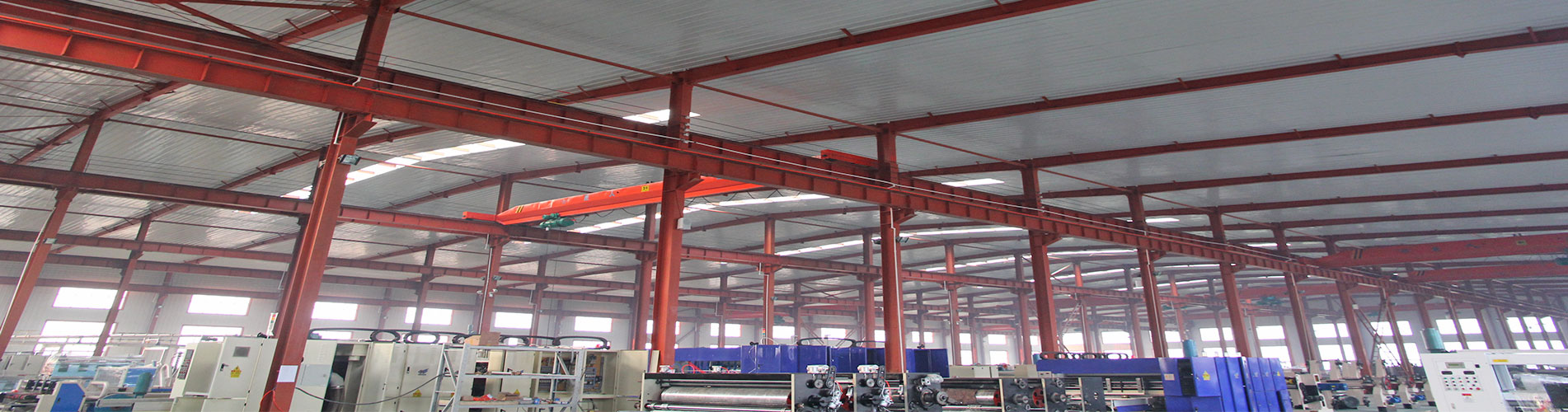

Advantages of steel structure poultry house constructed with sandwich panel
Steel-frame houses clad in insulated sandwich panels have become the default choice for modern commercial broiler, layer, and breeder operations. The combination solves the three problems that matter most in poultry housing: climate control, biosecurity, and speed to first flock. Below is a structured breakdown.
1. Superior Thermal Insulation & Climate Control
Sandwich panels (PU / PIR / EPS / rock-wool core between two coated steel facings) deliver very low U-values at modest thickness — commonly 60–80 mm walls and 80–100 mm roofs for controlled-environment houses.
PIR/PUR cores achieve a lambda around 0.022 W/m·K, holding the house in the 20–24 °C / 60–70% RH band birds need for good feed-conversion and egg yield.
The insulated envelope eliminates cold-bridge condensation. On an uninsulated steel roof, moisture from litter and bird respiration condenses and drips back onto bedding, spiking ammonia and driving respiratory disease. A continuous panel core keeps the inner face above dew point.
Result: measurable savings on heating, tunnel-fan and evaporative-cooling energy versus concrete or single-skin steel.
2. Fast Construction & Early Payback
Prefabricated bolts-together steel frame + cut-to-size panels mean a 2,000 m² house can be fully enclosed in under two weeks; overall build time runs 30–45% faster than masonry/concrete equivalents.
Lightweight steel cuts foundation cost and works in remote sites with minimal labor.
Faster to first flock = faster cash flow, which is often the decisive CAPEX argument (indicative shell cost USD 90–140/m² for steel+panel vs 130–200/m² for insulated concrete).
3. Biosecurity & Hygiene
Smooth, non-porous steel facings can be pressure-washed and fogged with disinfectant between flocks — no cracks for red mites, bacteria, or mold to persist in (a well-known weakness of timber frames).
Tight panel joints, sealed penetrations, and optional concrete curbs / vermin barriers create a sealable envelope that blocks wild-bird and rodent entry.
Better clean-out directly correlates with lower mortality and more stable egg production reported by farms converting from wood or blockwork.
4. Durability in a Chemically Hostile Environment
Poultry houses are aggressively corrosive: ammonia + H₂S + high RH + frequent chemical washdown. Hot-dip galvanized frames (zinc sacrificial anode) plus correctly specified coatings handle this far better than timber or unprotected steel.
Specify the interior facing per ISO 12944 corrosivity category — plastisol (≈200 µm) or PVDF for the inner face in intensive houses; standard polyester is usually not enough.
Design life: 30–50+ years for the galvanized frame, 25–30+ years for quality panels, versus ~15 years before a timber frame typically needs replacement.
5. Structural Flexibility for Automation
Portal frames give clear spans of 12–20 m with no internal columns, which is exactly what tunnel ventilation, multi-tier cage systems, automatic feeding/nipple lines, and manure-belt equipment require.
Modular bays make phased expansion straightforward — bolt on another bay without disturbing the running flock next door.
Roof and wall panels double as insulated duct board for air-inlet plenums, simplifying ventilation design.
6. Safety & Weather Resistance
Engineered for local wind (up to ~150 mph / 1.1 kN/m²) and snow loads; properly anchored frames resist roof uplift in storms.
PIR, PU, and especially rock-wool cores offer fire-rated assemblies, a growing requirement in agricultural fire codes.
Galvanized + coated steel is termite- and rot-proof — a real advantage in humid subtropical regions.
7. Lifecycle Cost & ESG
Lower maintenance (no repainting, no termite treatment, no crack sealing), reduced insurance premiums in many markets, and 30–50-year service life beat timber on lifecycle cost even when initial steel CAPEX runs 20–30% higher.
Steel is fully recyclable; panels generate minimal construction waste through prefabrication. Embodied carbon of a steel+PIR shell is typically 2–4× lower than a comparable concrete shell, and green-finance programs increasingly reward high-insulation specs regardless of material.
If you tell me your climate zone, bird type (broiler/layer/breeder), target house dimensions, and local wind/snow code, I can sketch a panel-thickness + core-type + facing spec tailored to your project.
Categories
latest blog
Tags


For inquiries about our products or pricelist, please leave to us and we will be in touch within 24 hours.
© Copyright: 2026 Hebei Baofeng Steel Structure CO.,LTD All Rights Reserved.

IPv6 network supported


 +8615720226351
