

 English


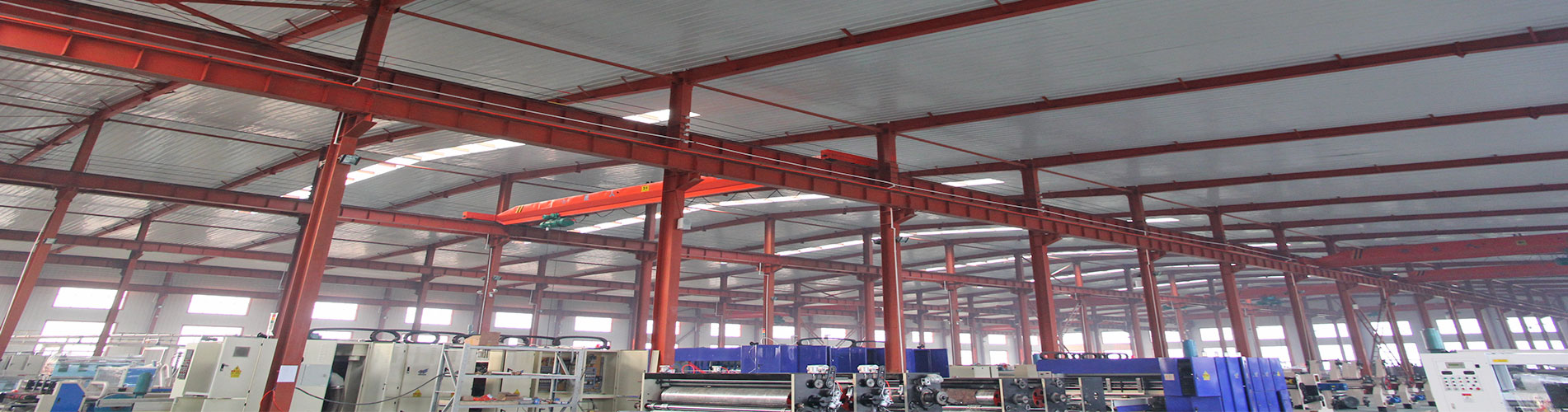

Key Design Considerations for Steel Workshop With Cranes
Designing a steel workshop that incorporates overhead cranes is a significant engineering undertaking that goes far beyond a simple storage building. The crane system fundamentally influences the entire structure's design, cost, and functionality.
Here are the key design considerations, broken down into logical categories.
1. Crane System Specifications (The Starting Point)
This is the most critical step. The crane's requirements dictate the building's dimensions and structural system. You must decide this beforethe building is designed.
Crane Type:
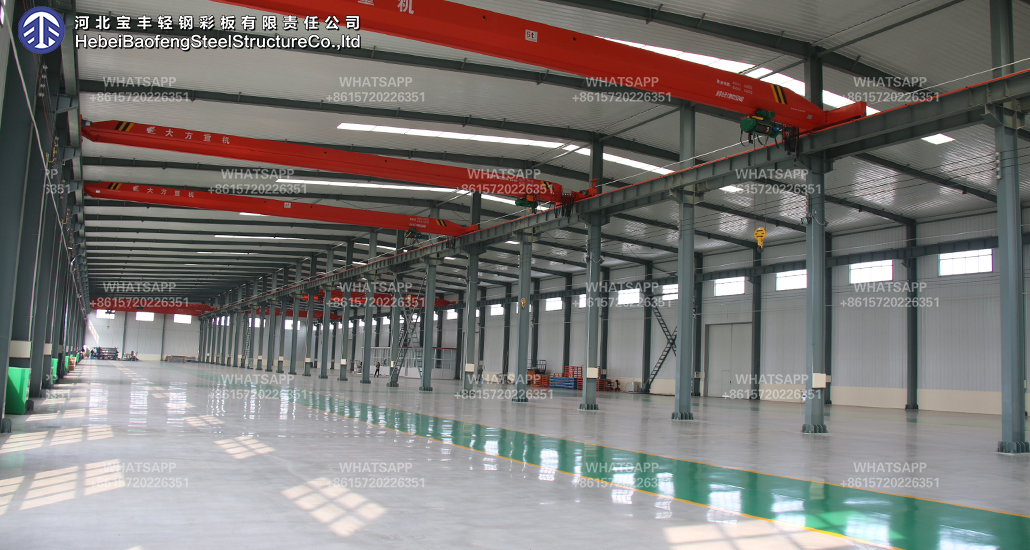
Bridge Cranes (Overhead Cranes): The most common for heavy-duty workshops. They consist of a bridge (the horizontal beam) that moves on rails along the length of the building, and a trolley that moves along the bridge.
Gantry Cranes: Similar to bridge cranes but supported by freestanding legs that run on a floor-level track. They are independent of the building structure, which can be beneficial for existing buildings or outdoor applications.
Jib Cranes: Smaller, arm-like cranes that provide rotation within a specific circular area. Ideal for individual workstations within a larger workshop.
Capacity (Lifting Weight):
The maximum weight the crane must lift. This is not just the object's weight; it must include the weight of the lifting attachments (slings, hooks, magnets, etc.). Always plan for future needs (e.g., specify a 10-ton crane even if current needs are 7 tons).
Span:
The distance between the crane runway rails. This determines the width of the building's crane bay.
Lift Height:
The required vertical distance from the floor to the hook in its raised position. This affects the building's eave height significantly.
Class of Service (CMAA Classification):
This indicates how intensively the crane will be used. It ranges from Class A (Standby/Infrequent use) to Class F (Continuous severe service). A higher class requires a more robust (and expensive) crane and a heavier-duty building structure to withstand fatigue.
Clearance:
The required space between the hook, the crane bridge, and the building's roof structure. This is crucial for avoiding collisions.
2. Structural System Design
The building frame must resist the loads and dynamics imposed by the crane.
Frame Type:
Single-Span vs. Multiple-Spans: A single, wide span is simpler and offers unobstructed space but can be more expensive for very large widths. Multiple spans with interior columns are more economical for very wide buildings but can obstruct floor space.
Rigid Frame vs. Truss Frame: Rigid frames (I-beams) are common for spans up to ~60 meters. Truss frames can be more economical for larger spans as they are lighter but have greater depth, reducing headroom.
Column Design:
Moment-Resisting Columns: Designed to handle the lateral thrust and vertical loads from the crane. They are typically much heavier and have larger foundations than columns in a non-crane building.
Increased Section Sizes: Columns and rafters are sized to handle the additional vertical loads (from the crane and lifted load) and horizontal forces (from crane acceleration/braking and bridge movement).
Runway System:
Integrated Runway Beam: The crane rails are mounted directly onto the building's steel frame (often a specially designed crane runway beam). This is a very clean and common solution.
Freestanding Runway System: Separate columns and beams are installed insidethe building to support the crane rails. This isolates the crane loads from the main building frame, which can be beneficial for very heavy cranes or seismic zones.
Bracing:
Extensive bracing is required in the roof and walls to provide lateral stability and resist the longitudinal forces generated when the crane travels and stops.
3. Building Layout and Dimensions
Bay Size:
The spacing between the main frame columns. A wider bay spacing reduces the number of columns on the sidewalls, which is good for access and flexibility, but increases the cost of the sidewall girts and roofing.
Eave Height:
This is determined by: Lift Height + Crane Hoist Height + Clearance + Depth of Roof Structure. It is always higher than initially anticipated.
Door Considerations:
Overhead coiling doors or sectional doors are standard. The door opening must be tall and wide enough to accommodate the largest items that will be moved in and out, considering the crane hook position.
4. Foundations
Crane loads are dynamic and concentrated. The foundations are critical to prevent settlement.
Isolated Spread Footings:
Each column typically has its own large, reinforced concrete footing designed to handle high vertical and moment loads.
Deep Foundations (Piles):
May be required in areas with poor soil conditions.
Fatigue Consideration:
The repeated loading and unloading from crane cycles must be accounted for in the foundation design to prevent long-term failure.
5. Operational and Safety Features
Crane Stops/Bumpers:
Physical stops at the end of the runway to prevent the crane from running off the rails.
Maintenance Platform & Ladder:
Safe access is required for inspecting and maintaining the crane and its runway system.
Clearance Labels:
Markings on columns and walls indicating the safe working limits for the crane hook.
Lighting & Power:
Adequate lighting for the work area. Conveniently located power outlets for tools and the crane itself (if electrified).
Fire Protection:
The design may need to accommodate sprinkler systems, which must be routed around the crane and its clearances.
6. Future-Proofing
Future Crane Capacity:
Design the structure for a higher crane capacity than initially installed. Adding reinforcement later is extremely difficult and expensive.
Expansion:
Consider the possibility of future building expansion. Plan the structure and crane runway to allow for an extension without major modifications.
Categories
latest blog
Tags


For inquiries about our products or pricelist, please leave to us and we will be in touch within 24 hours.
© Copyright: 2026 Hebei Baofeng Steel Structure CO.,LTD All Rights Reserved.

IPv6 network supported


 +8615720226351